
Home
About Us
Company Overview
Corporate Excellence
Chairman's Address
Patent Certificate
Development Journey
Corporate Culture
Application areas
Blog
National Policy Information
Industry Information
Company News
Product Center
Antimony trioxide
Antimony glycol
Antimony ingot
Crushed Antimony
Dust-free antimony oxide
Flame-retardant masterbatch
Marketing Network
Kunming
Shanghai
Guangzhou
Sichuan–Chongqing
Tianjin
Shandong, Jinan
Contact us
Product
News
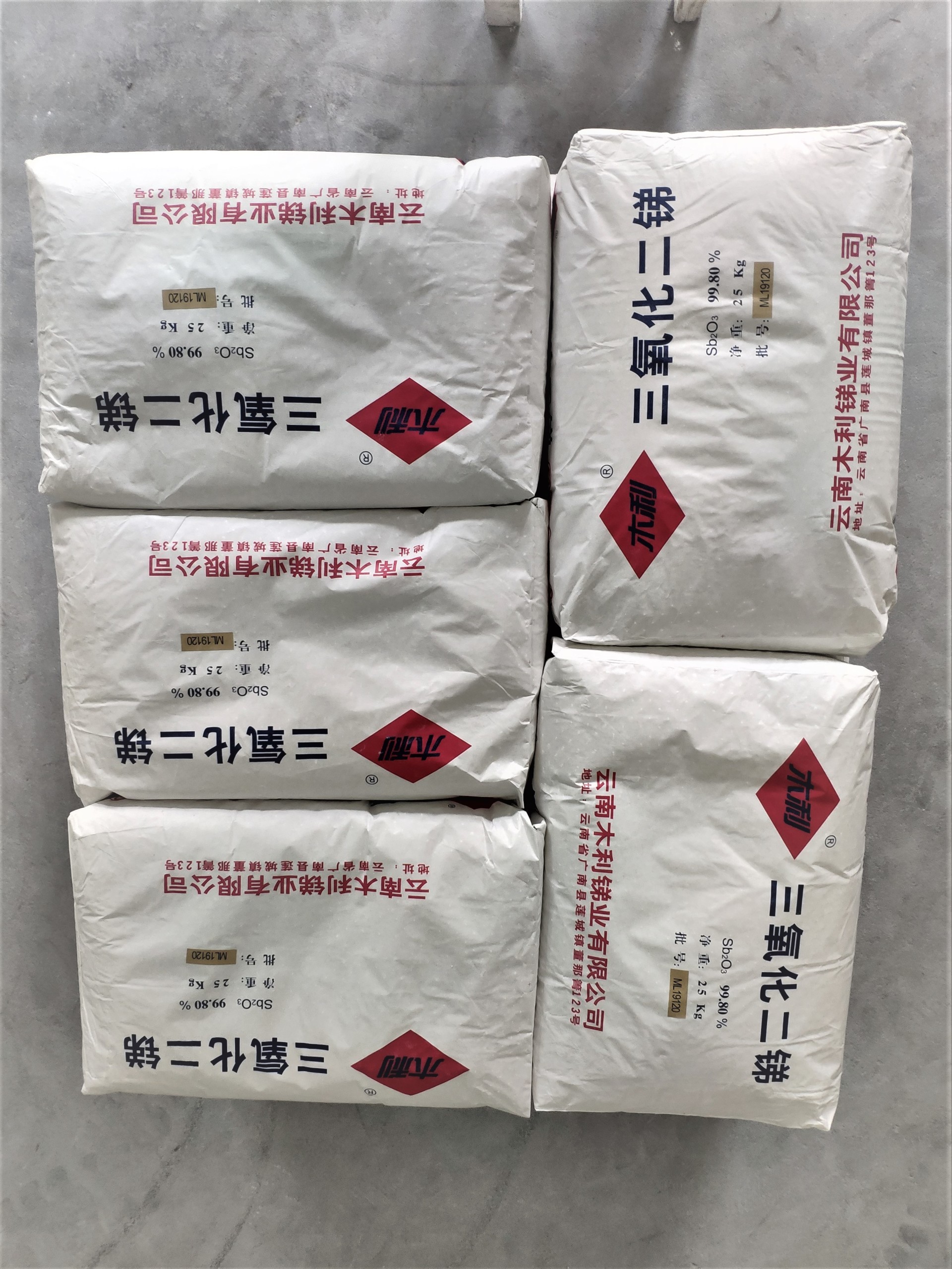
Packaging: The product is packaged in double-layer bags—outer bags made of paper-plastic composites, and inner bags crafted from polyethylene film. Each bag has a net weight of 25.0 kg and is palletized into one-ton pallets. Alternatively, high-strength ton bags can also be used for one-ton-per-pallet packaging, with options available to meet specific customer requirements.
Keywords: Antimony trioxidepackagingantimonypolyethyleneweight
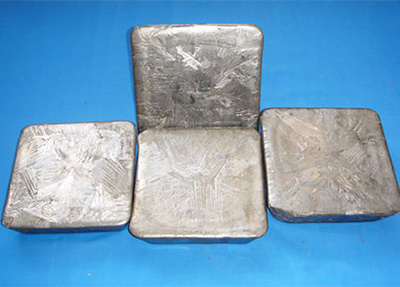
Specifications: Grade No.: Sb99.90, Sb99.85, Sb99.65 Size: 0-3mm Crushed Antimony, 3-8mm Crushed Antimony Composition: Sb% ≥99.90, 99.85, 99.65 As% ≤0.02, 0.05, 0.10 Fe% ≤0.015, 0.02, 0.03 S% ≤0.008, 0.04, 0.06 Cu% ≤0.01, 0.015, 0.05 Se% ≤0.003, 0.005, 0.005 Pb% ≤0.03, 0.08, 0.10 Bi% ≤0.0030, 0.005, 0.005 Total Impurities ≤0.10, 0.15, 0.35 Properties: Antimony is a non-ferrous heavy metal with a silvery-white appearance. It crystallizes in the hexagonal system, has a melting point of 630.5°C, a Mohs hardness of 3, and a density of 6.69 g/cm³. It is a poor conductor of heat and electricity. Antimony is brittle, easily ground into fine powder, but lacks ductility. At room temperature, it does not react with air or oxygen. Additionally, antimony is insoluble in water and generally resists reactions with acids. Applications: ⑴ Antimony is primarily used to enhance the properties of metals and alloys. It finds applications in: - Battery grids, lead plates, and connecting components; - Bearing alloys (such as bearing shells); - Antimony bronze; - Type metal for printing; - Cable armor (sheathing); - Lead sheets, pipes, and foils; - Soldering materials; - Soft tubing made from lead-based alloys via extrusion technology; - Ammunition bullets; - Soldering alloys (particularly for high-quality artistic castings and precision casting); - Hard lead products, among others. ⑵ Antimony compounds—such as antimony trioxide, antimony trisulfide, and various halogenated antimony compounds—are widely utilized across multiple industries, including plastics, synthetic fibers, enamelware, glass manufacturing, paint pigments, ammunition primers, matches, military applications, rubber production, and pharmaceuticals. Manufacturing Facility: Yunnan Muli Antimony Industry Co., Ltd. Packaging: Antimony ingots are packaged in wooden crates, with each crate weighing either 100 kg or 1000 kg net. Custom packaging options are also available upon request. Storage: Store in a dry, clean environment.
Keywords: Antimony ingotantimonysolderingpackagingcrushedapplications
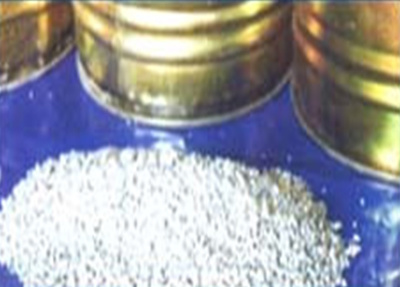
Specifications: 0–3 mm crushed antimony and 3–8 mm crushed antimony, produced using antimony ingots with an Sb content of 99.65% or higher, tailored to customer requirements. Properties: Antimony is a non-ferrous heavy metal. It has a silvery-white appearance and crystallizes in the hexagonal system. Its melting point is 630.5°C, with a Mohs hardness of 3 and a density of 6.69 g/cm³. Antimony is a poor conductor of heat and electricity. It is brittle, easily ground into fine particles, but lacks ductility. At room temperature, it does not react with air or oxygen. Additionally, antimony is insoluble in water and generally resists reactions with most acids. Applications: ⑴ Antimony is primarily used to enhance the properties of metals and alloys. Key applications include: - Battery grid plates, lead sheets, and connecting components; - Bearing alloys (such as bearing bushings); - Antimony bronze; - Type metal for printing; - Cable armor (sheathing); - Lead sheets, lead pipes, and lead foils; - Soldering materials; - Soft tubing made from lead-based alloys via extrusion technology; - Ammunition bullets; - Solder alloys (ideal for high-quality artistic castings and precision casting processes); - Hard lead products, among others. ⑵ Antimony is also essential in the production of antimony trioxide, antimony trisulfide, and various antimony halides—compounds widely utilized across industries such as plastics, synthetic fibers, enamelware, glass manufacturing, paint pigments, propellant primers for firearms and artillery shells, matches, military applications, rubber processing, and pharmaceuticals. Manufacturer: Yunnan Muli Antimony Industry Co., Ltd. Packaging: Crushed antimony (antimony granules) is packaged in galvanized iron drums, each with a net weight of 90 kg; customized packaging options are available upon request. Storage: Store in a dry, clean environment.
Keywords: Crushed Antimonyantimonysolderingmanufacturingpackagingapplicationscrushed